
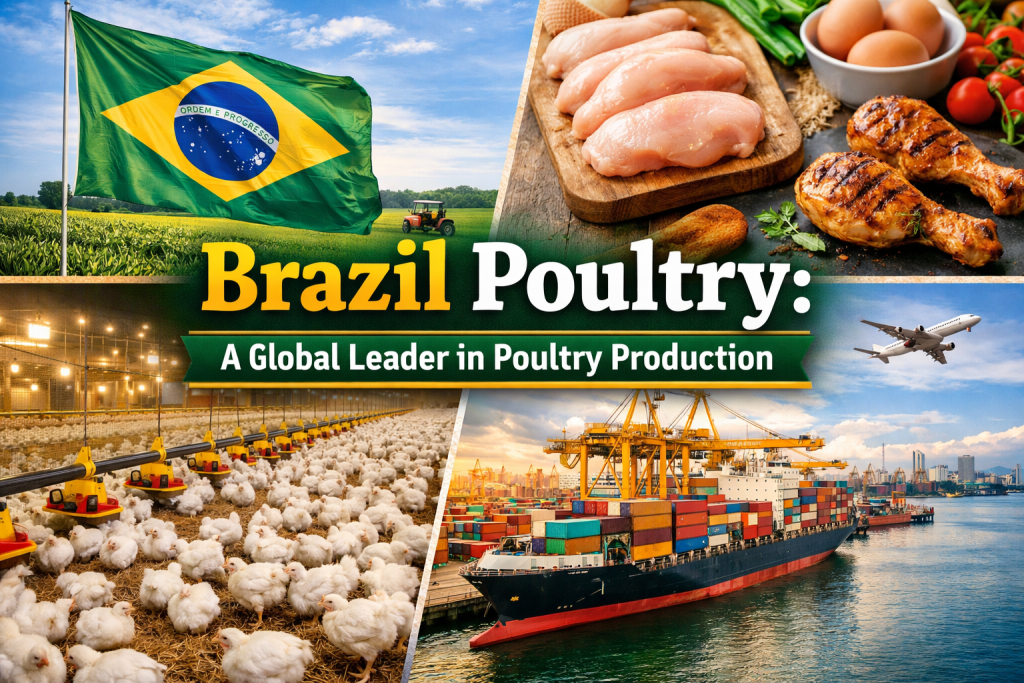
Introduction to Brazil Poultry Industry
Brazil poultry exports play a critical role in the global food supply chain. As one of the world’s largest producers and exporters of chicken meat, Brazil has earned a strong reputation for quality, affordability, halal compliance, and large-scale production capacity. Countries across the Middle East, Asia, Europe, and Africa rely heavily on Brazilian poultry to meet growing protein demands.
The success of Brazil poultry exports is driven by advanced farming practices, strict biosecurity measures, favorable climate conditions, and efficient logistics infrastructure.
Overview of Poultry Production in Brazil
Brazil is among the top poultry producers globally, with millions of tons of chicken meat produced annually. The poultry sector contributes significantly to the country’s GDP and provides employment to millions of people across farming, processing, logistics, and exports.
Key factors behind Brazil’s poultry production success include:
- Abundant availability of corn and soybeans for feed
- Favorable climate for poultry farming
- Advanced breeding and genetics programs
- Strong government and private sector collaboration
Brazilian poultry farms follow modern production systems that ensure animal welfare, disease control, and consistent supply throughout the year.
Why Brazil Is the World’s Leading Poultry Exporter
Brazil poultry exports dominate the global market due to several competitive advantages:
1. Competitive Pricing
Low feed costs and economies of scale allow Brazilian exporters to offer competitive prices without compromising quality.
2. Strict Biosecurity and Quality Control
Brazil maintains strict sanitary and phytosanitary measures, ensuring poultry products meet international safety standards.
3. Halal-Certified Poultry
A major strength of Brazil poultry exports is halal compliance. Most processing plants are halal-certified, making Brazil the top supplier to Muslim-majority countries.
4. Diverse Export Markets
Brazil exports poultry to more than 150 countries, reducing dependency on a single market and ensuring stable trade flows.
Brazil Poultry Export Markets
Brazil poultry exports reach major global regions, including:
- Middle East: Saudi Arabia, UAE, Iraq, Kuwait
- Asia: China, Japan, South Korea, Philippines
- Africa: South Africa, Egypt, Angola
- Europe: Netherlands, United Kingdom, Germany
This wide export footprint demonstrates Brazil’s ability to meet varying regulatory and cultural requirements across regions.
Halal Poultry Production in Brazil
Halal certification is a cornerstone of Brazil poultry exports. Brazilian slaughterhouses work closely with recognized halal certification bodies to ensure compliance with Islamic dietary laws.
Key halal practices include:
- Manual slaughter by certified Muslim slaughtermen
- Invocation of prayer during slaughter
- Strict separation of halal and non-halal products
This commitment has positioned Brazil as the largest halal poultry exporter in the world.
Quality Standards and Certifications
Brazilian poultry exporters comply with internationally recognized standards, including:
- HACCP (Hazard Analysis and Critical Control Points)
- ISO 22000 Food Safety Management
- GMP (Good Manufacturing Practices)
- Government inspection by Brazil’s Ministry of Agriculture (MAPA)
These certifications ensure food safety, traceability, and consumer confidence.
Poultry Processing and Cold Chain Logistics
Brazil has invested heavily in modern poultry processing plants equipped with advanced technology. Products are rapidly frozen and stored in temperature-controlled facilities to maintain freshness.
Cold chain logistics include:
- Blast freezing technology
- Refrigerated transport
- Port-based cold storage facilities
These systems ensure Brazilian poultry arrives in export markets in optimal condition.
Sustainability in Brazil Poultry Industry
Sustainability is becoming increasingly important in Brazil poultry exports. Producers are adopting eco-friendly practices such as:
- Efficient water usage
- Waste recycling
- Reduced carbon emissions
- Responsible feed sourcing
Many exporters now align with global sustainability frameworks to meet buyer expectations.
Challenges Facing Brazil Poultry Exports
Despite its strengths, the Brazil poultry industry faces challenges, including:
- Fluctuating feed prices
- Trade restrictions and import regulations
- Disease outbreaks such as avian influenza (managed through strict controls)
However, Brazil’s proactive monitoring and response systems help minimize risks.
Future of Brazil Poultry Exports
The future of Brazil poultry exports remains strong due to:
- Rising global protein demand
- Expansion into emerging markets
- Investment in technology and sustainability
Brazil is expected to maintain its leadership position in the global poultry trade for years to come.
Frequently Asked Questions (FAQ)
Why is Brazil the largest poultry exporter?
Brazil benefits from low production costs, strong biosecurity, halal certification, and access to global markets.
Is Brazilian poultry halal?
Yes, the majority of Brazil poultry exports are halal-certified.
Which countries import Brazilian poultry?
Over 150 countries import Brazilian poultry, including Saudi Arabia, China, Japan, and South Africa.
- Brazil Chicken Export Companies
- Halal Poultry Supply Chain
- Food and Agriculture Organization (FAO): https://www.fao.org
- Brazilian Animal Protein Association (ABPA): https://abpa-br.org
Conclusion
Brazil poultry exports continue to dominate the global chicken market due to quality, affordability, halal compliance, and reliable supply chains. With ongoing investment in sustainability and innovation, Brazil remains the preferred choice for poultry importers worldwide.
If you are looking for a trusted poultry supplier, Brazil stands out as a global leader in poultry exports.