
Introduction
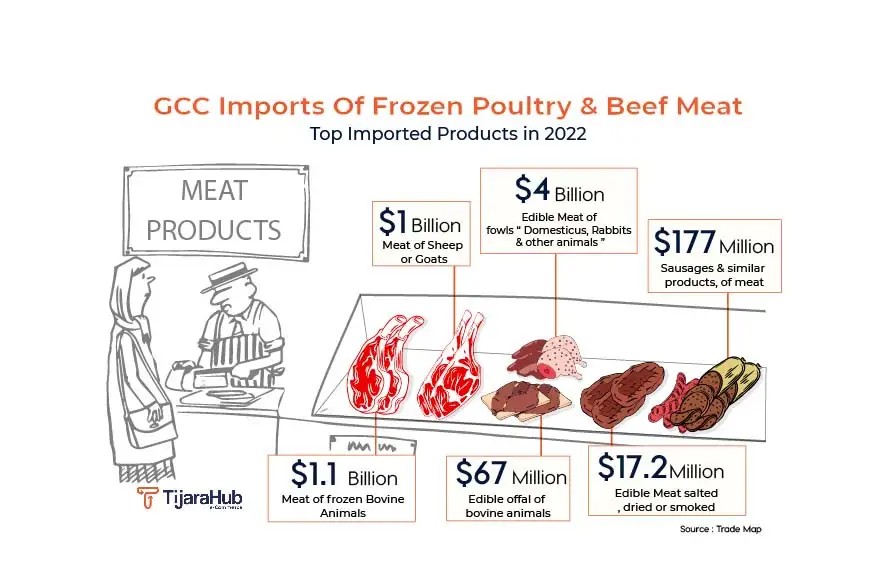
The GCC poultry import market remains one of the most important and stable regions in global poultry trade. The Gulf Cooperation Council (GCC), which includes Saudi Arabia, United Arab Emirates (UAE), Kuwait, Qatar, Oman, and Bahrain, relies heavily on poultry imports to meet domestic demand.
Due to limited agricultural land, water scarcity, and high feed production costs, GCC countries import a significant portion of their chicken consumption. In 2026, the region continues to represent a major opportunity for global exporters, particularly halal-certified suppliers.
This comprehensive 2000+ word report analyzes GCC chicken import statistics 2026, country-by-country demand, pricing trends, halal regulations, and long-term export opportunities.
Overview of the GCC Poultry Market
Member Countries
- Saudi Arabia
- United Arab Emirates
- Kuwait
- Qatar
- Oman
- Bahrain
Key Market Characteristics
- High per capita chicken consumption
- Strong preference for halal-certified products
- Growing food service and hospitality sectors
- Government food security initiatives
Chicken is the most consumed meat across GCC countries due to affordability compared to beef and lamb.
GCC Chicken Consumption Trends
Per Capita Consumption
GCC countries rank among the highest globally in poultry consumption per person.
- Saudi Arabia: High per capita intake
- UAE & Qatar: Strong retail and hospitality demand
- Kuwait & Oman: Growing frozen poultry consumption
Population growth and tourism expansion continue to support rising demand.
Saudi Arabia Poultry Import Data
Saudi Arabia is the largest poultry market in the GCC region.
Key Insights
- Significant importer of frozen whole chicken
- Strong government regulation via SFDA
- High halal compliance standards
- Mix of domestic production and imports
Saudi Arabia remains the most attractive export destination within the GCC.
UAE Frozen Chicken Import Market
The UAE acts as both a consumption market and a re-export hub.
Market Highlights
- Strong demand from hotels and restaurants
- Retail supermarket expansion
- Free zone trading activities
- High-quality packaging requirements
UAE buyers often prefer well-branded and premium packaged products.
Kuwait, Qatar, Oman & Bahrain Market Overview
These markets are smaller but highly stable.
Key Characteristics
- Dependence on imports
- Strict halal standards
- Growing modern retail infrastructure
- Stable long-term supplier relationships
Exporters often secure multi-year supply contracts in these countries.
Halal Chicken Demand in GCC
Halal compliance is mandatory across all GCC countries.
Halal Requirements Include:
- Manual Islamic slaughter (Zabiha)
- Recognized halal certification body
- Arabic labeling
- Separate halal supply chain integrity
Exporters must ensure certification recognition by local authorities.
Popular Poultry Products in GCC Market
Whole Frozen Chicken
- 900g–1200g preferred size
- Individually packed
- High demand in Saudi Arabia
Chicken Leg Quarters
- Affordable option
- Popular in food service sector
Boneless Chicken Breast
- High demand in UAE & Qatar
- Used in restaurants and catering
Processed & Value-Added Poultry
- Nuggets
- Marinated products
- Ready-to-cook items
GCC Poultry Import Statistics 2026 (Indicative)
While exact numbers vary by year, the GCC region imports millions of metric tons of poultry annually.
Saudi Arabia accounts for the largest share, followed by UAE.
Demand is expected to grow steadily due to:
- Population increase
- Tourism growth
- Retail modernization
- Food security diversification
Pricing Trends in GCC Poultry Imports
Average CIF Price Ranges
- Whole frozen chicken: USD 1,400 – 1,900 per MT
- Leg quarters: USD 1,000 – 1,400 per MT
- Boneless breast: USD 2,300 – 3,000 per MT
Prices depend on:
- Export origin
- Freight rates
- Currency exchange
- Seasonal demand (e.g., Ramadan)
Major Poultry Exporters to GCC
Key supplying countries include:
- Brazil (largest supplier)
- USA
- Turkey
- Ukraine
- Thailand
Brazil dominates due to strong halal compliance and price competitiveness.
Import Regulations & Documentation
Common requirements across GCC countries:
- Veterinary health certificate
- Halal certificate
- Certificate of origin
- Arabic labeling
- Import permit approval
Saudi Arabia and UAE have particularly strict regulatory systems.
Medium & Low Competition Keyword Opportunities
For SEO targeting Gulf poultry trade:
Medium Competition Keywords
- GCC chicken import statistics 2026
- Saudi Arabia poultry import data
- UAE frozen chicken import market
Low Competition Long-Tail Keywords
- bulk frozen chicken suppliers GCC
- halal chicken demand in Gulf countries
- poultry export opportunities Gulf region 2026
- import frozen chicken to Saudi Arabia requirements
These keywords attract B2B traders and food distributors.
Challenges in GCC Poultry Imports
- Regulatory updates
- Price volatility
- Freight cost fluctuations
- Import quota policies
- Local production expansion initiatives
Despite challenges, imports remain essential.
Future Outlook (2026–2030)
The GCC poultry import market is expected to grow steadily due to:
- Continued population expansion
- Diversified food security policies
- Tourism and hospitality growth
- Expansion of supermarket chains
Exporters investing in strong halal certification, brand presence, and consistent logistics will secure long-term contracts.
Frequently Asked Questions (FAQs)
1. Which GCC country imports the most chicken?
Saudi Arabia is the largest poultry importer in the GCC.
2. Is halal certification mandatory in GCC?
Yes, halal compliance is required in all GCC countries.
3. What size whole chicken is preferred in Saudi Arabia?
Typically 900g–1200g frozen whole chicken.
4. Which exporters dominate GCC poultry trade?
Brazil is the leading supplier.
5. How much chicken does GCC import annually?
The region imports millions of metric tons each year.
6. Are prices higher during Ramadan?
Demand often increases during Ramadan, impacting pricing.
7. Can new exporters enter GCC market easily?
Yes, but compliance with strict halal and regulatory standards is essential.
8. What are key growth drivers in GCC poultry market?
Population growth, tourism, retail expansion, and food security strategies.
Conclusion
The GCC poultry import market remains one of the most lucrative and stable destinations for global exporters. With strong halal demand, high consumption rates, and continued population growth, the region offers long-term trade opportunities.
Exporters who maintain strict compliance, competitive pricing, and reliable cold-chain logistics will continue to succeed in the Gulf region.