
Introduction
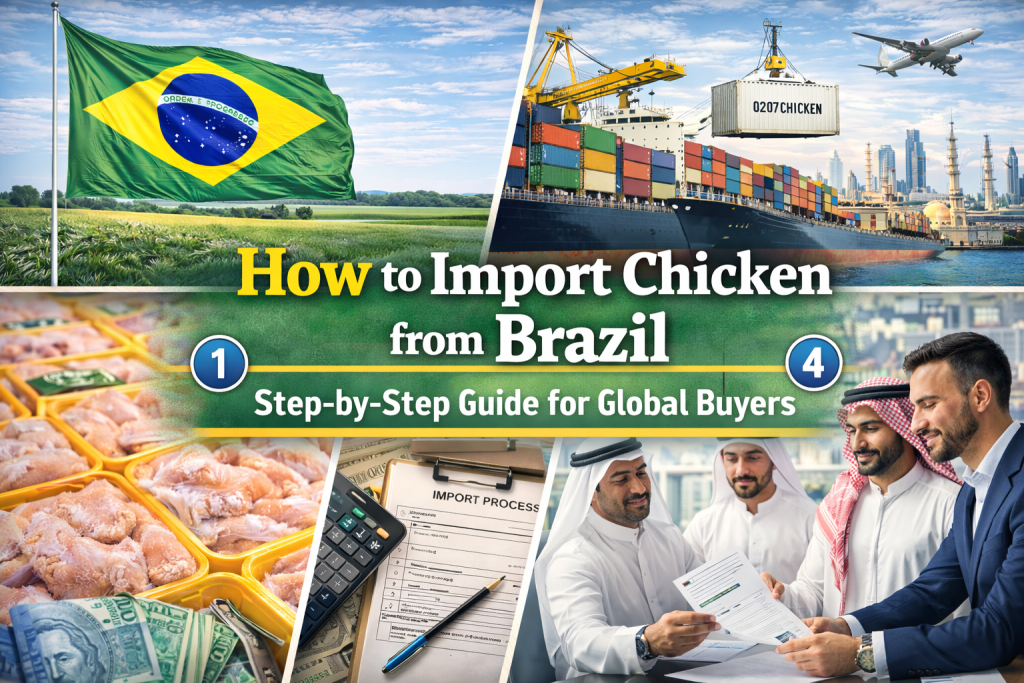
If you are looking to expand your poultry supply chain, understanding how to import chicken from Brazil is essential. Brazil is the world’s largest chicken exporter, supplying high-quality frozen and halal poultry to more than 150 countries.
Importing chicken from Brazil can be highly profitable when done correctly. However, it requires careful planning, supplier verification, documentation compliance, and logistics coordination.
This guide provides a complete, white-hat SEO optimized overview of the Brazil chicken import process for wholesalers, distributors, retailers, and government buyers.
Step 1: Research Your Market Requirements
Before importing chicken from Brazil, analyze your local market:
- What chicken cuts are in demand?
- Is halal certification required?
- What are your country’s import regulations?
- What are current import duties and tariffs?
Understanding your domestic compliance rules helps prevent shipment delays and financial losses.
Step 2: Find a Reliable Brazil Chicken Exporter
Choosing the right supplier is the most important step.
What to Look For:
- MAPA-approved processing plant
- Valid halal certification (if required)
- HACCP and ISO 22000 compliance
- Experience exporting to your country
- Transparent pricing and communication
Always request company profiles, certifications, and export history before signing contracts.
Step 3: Request Product Specifications & Samples
Ask the exporter for:
- Product specification sheet
- Weight range and packaging details
- Shelf life confirmation
- Storage requirements (-18°C for frozen chicken)
- Photos and labeling samples
If possible, request physical samples or third-party inspection reports.
Step 4: Negotiate Pricing & Incoterms
Brazilian exporters typically quote prices under:
FOB (Free on Board)
- Buyer arranges shipping and insurance.
CIF (Cost, Insurance & Freight)
- Exporter handles shipping to destination port.
Compare offers based on:
- Product type (whole chicken, leg quarters, breast)
- Container load quantity (20ft or 40ft reefer)
- Shipping distance
Step 5: Confirm Halal & Certification Requirements
For Muslim-majority markets, halal certification is mandatory.
Ensure:
- Recognized halal authority approval
- Proper halal logo on packaging
- Halal certificate valid for shipment period
Other certifications may include:
- Veterinary health certificate
- Certificate of origin
Brazil Poultry Certifications & Quality Standards
Step 6: Review Export Documentation
Required export documents typically include:
- Veterinary health certificate (issued by MAPA)
- Commercial invoice
- Packing list
- Certificate of origin
- Bill of lading
- Halal certificate (if required)
Double-check HS codes to ensure correct customs classification.
Brazil Poultry Export Documentation & HS Codes
Step 7: Arrange Shipping & Cold Chain Logistics
Chicken must be transported in reefer containers at -18°C or below.
Key Considerations:
- Container inspection before loading
- Temperature monitoring system
- Transit time (typically 25–40 days depending on region)
- Port handling procedures
Proper cold-chain management ensures product quality upon arrival.
Step 8: Customs Clearance at Destination
Work with a licensed customs broker to:
- Submit import declaration
- Pay applicable duties and taxes
- Schedule inspection (if required)
- Obtain release order
Ensure all documents match exactly to avoid delays.
Step 9: Storage & Distribution
After customs clearance:
- Transfer goods to cold storage facilities
- Maintain temperature control
- Distribute to retailers or wholesalers
Cold chain integrity must continue until final sale.
Estimated Timeline for Importing Chicken from Brazil
- Supplier selection: 1–2 weeks
- Contract negotiation: 1 week
- Production & loading: 2–3 weeks
- Sea freight transit: 3–6 weeks
- Customs clearance: 3–7 days
Total average timeline: 6–10 weeks
Common Mistakes to Avoid
- Choosing non-approved exporters
- Ignoring halal authority recognition
- Incorrect HS code declaration
- Poor freight planning
- Not verifying destination import rules
Due diligence reduces risk significantly.
Why Importers Prefer Brazil
Importers choose Brazil because of:
- Competitive pricing
- High production capacity
- Reliable halal compliance
- Strong regulatory oversight
- Stable long-term supply
Brazil remains the most trusted poultry export origin worldwide.
Conclusion
Understanding how to import chicken from Brazil ensures smooth trade operations and long-term profitability. From selecting the right exporter to managing documentation and cold-chain logistics, every step plays a critical role.
With proper planning and certified suppliers, importing Brazilian chicken can be a secure and highly profitable business opportunity.